
Hall's Bakery shares practical, down-to-earth guidance on home baking, artisan bread and cake recipes for readers across the UK.
- 0123456789
- Angle Bd Abdelmoumen & rue soumaya, Résidence
- [email protected]
Hall's Bakery shares practical, down-to-earth guidance on home baking, artisan bread and cake recipes for readers across the UK.
 By James Whitcombe
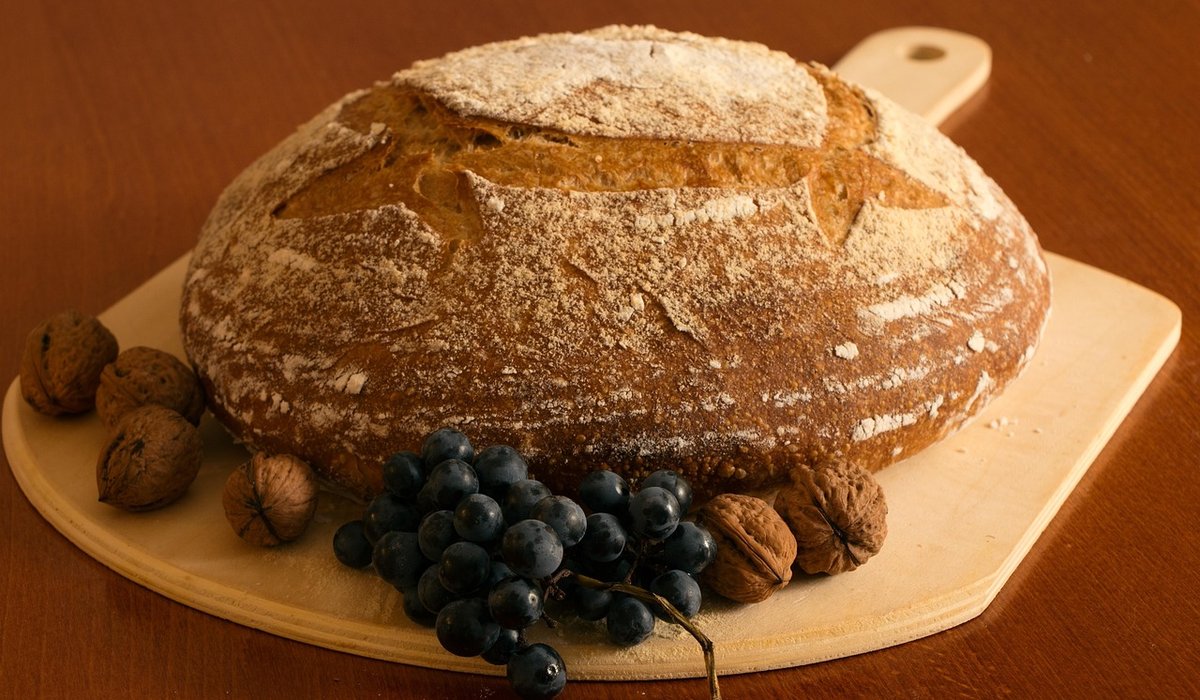
Wholemeal flour is not simply white flour with the colour left in. It contains the bran and germ of the wheat berry, and both of those things work against a soft crumb. Bran particles are sharp on a microscopic level, so they slice through the gluten strands you are trying so patiently to build. The bran also absorbs a great deal of water and holds on to it, which means the gluten in the rest of the dough is left short of the hydration it needs to become elastic.
The germ brings fat and enzymes into the mix, which is lovely for flavour but adds to the heaviness. Add the fact that wholemeal flour is usually milled from a slightly weaker wheat than strong white bread flour, and you can see why so many home-baked wholemeal loaves come out worthy but solid: fine for a doorstep slice, miserable for a sandwich.
The fix is not complicated. It is simply a matter of giving the dough what it is missing.
Replacing part of the wholemeal with strong white bread flour restores the gluten strength and lightness that bran interferes with. A good starting point for a 900g (2lb) tin is 60 per cent wholemeal to 40 per cent strong white. Push it to half and half if you want a noticeably softer crumb; keep it at 70/30 if you want a more robust, nuttier loaf. Below about 50 per cent wholemeal, though, you are really baking a white loaf with aspirations.
A few other additions earn their place:
A tablespoon of lemon juice or vinegar is an old bakery trick. A slightly acidic dough holds its gas better, and you will not taste it in the finished loaf.
Wholemeal flour will happily drink 5 to 10 per cent more water than white flour, and if you do not give it that water, you get a dry, crumbly slice no matter how careful you are elsewhere. Aim for a hydration of 70 to 75 per cent — that is 700 to 750g of water for every 1000g of flour — and expect the dough to feel slacker and stickier than a white dough at the same figure.
There is a neat trick that makes a real difference: autolyse. Mix the flour and water alone, cover the bowl and leave it for 45 minutes before adding the yeast, salt and fat. The bran softens, the flour hydrates fully, and the dough comes together far more willingly when you finally start kneading. You will also find you need less kneading overall, which suits wholemeal because the bran is already weakening the gluten network.
Use 7g of instant yeast for a standard loaf, or 10g if your kitchen is cold. Mix everything to a shaggy mass, then knead for 10 to 12 minutes by hand, or 6 to 8 minutes in a stand mixer on a low speed. Resist the urge to keep adding flour. A wet, tacky dough gives a soft crumb; a dry one gives a brick.
Forget the windowpane test, which wholemeal rarely passes. Instead, look for a dough that stretches a good 20cm without snapping and feels smooth and slightly springy under your palm.
Prove it covered at room temperature until it has roughly doubled — usually 90 minutes to 2 hours. Then shape it into a tight oval, drop it into a greased 900g tin, and prove again until the crown of the dough sits just above the rim of the tin. That second rise is the whole game: under-prove and the loaf splits and tears, over-prove and it collapses in the oven. Gently press a floured fingertip into the side; if the dent springs back slowly and only partway, it is ready.
Bake at 220°C (200°C fan, gas 7) for 15 minutes, then drop to 200°C (180°C fan, gas 6) for a further 25 to 30 minutes. The loaf should sound hollow when tapped underneath and read 93–96°C on a probe thermometer pushed into the base. If the crust is browning too fast, tent it loosely with foil — do not open the oven door in the first 20 minutes.
Turn it out of the tin immediately and cool it completely on a wire rack, at least two hours. Wholemeal loaves are still setting their crumb as they cool, and cutting early gives you a gummy slice. Once cool, wrap it in a clean tea towel and keep it in a bread bin. It will be at its best for two days and perfectly good for toast for four; sliced and frozen, it keeps for three months.
Get the blend and the water right, and wholemeal stops being a compromise. You end up with a loaf that has real flavour and substance, a crumb you can cut thin, and — most importantly — a slice that toasts to a proper golden crisp.


We are not gonna make spamming
