
Hall's Bakery shares practical, down-to-earth guidance on home baking, artisan bread and cake recipes for readers across the UK.
- 0123456789
- Angle Bd Abdelmoumen & rue soumaya, Résidence
- [email protected]
Hall's Bakery shares practical, down-to-earth guidance on home baking, artisan bread and cake recipes for readers across the UK.
 By James Whitcombe
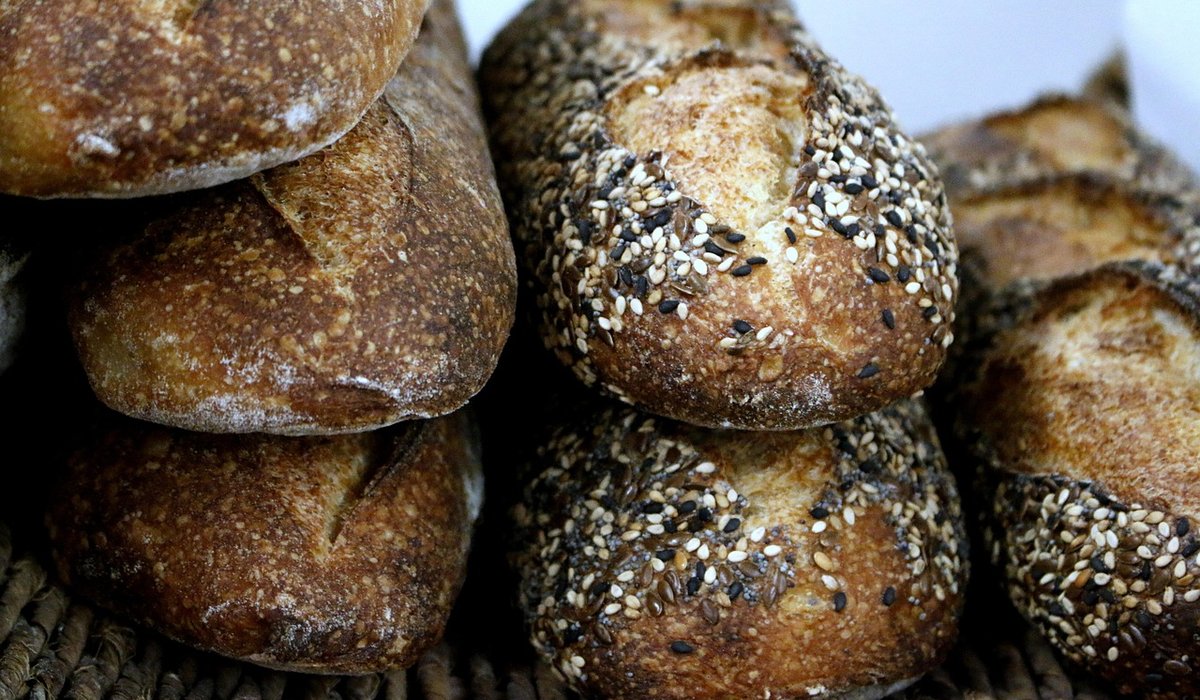
There is something deeply satisfying about pulling a golden, pillowy white loaf from your own oven. It is the bread that makes the best cheese and pickle sandwich, the toast that holds a proper amount of butter, and the one your family will ask for again and again. Shop-bought white bread is often soft because of emulsifiers and dough conditioners; a homemade loaf gets there through milk, a little fat and patience. Get the basics right and you will never look back.
This recipe makes one 900g (2lb) loaf, baked in a standard 900g loaf tin. Scales are far more reliable than cups for bread, so use them if you can.
Tip the flour into a large bowl, add the yeast to one side and the salt to the other, then rub in the butter with your fingertips until the mixture looks like fine breadcrumbs. Pour in the milk and bring everything together with a knife or your hand until you have a shaggy, slightly sticky dough.
Turn it out onto a lightly floured surface and knead for a full 10 minutes. Push the heel of your hand into the dough, fold it back over itself, give it a quarter turn and repeat. Resist the urge to keep adding flour — a dough that starts a little tacky will give a softer crumb. After a few minutes it will stop sticking to the worktop and become smooth and springy.
To check you have kneaded enough, take a small piece and stretch it between your fingers. If it forms a thin, translucent patch you can almost see through — the windowpane test — you are there. If it tears, knead for another two minutes.
Shape the dough into a ball, place it back in the bowl and cover with a clean teatowel or a lightly oiled sheet of cling film. Leave it somewhere warm and draught-free for 1 to 1½ hours, until it has roughly doubled in size. Airing cupboard, sunny windowsill or the top of a warm (but switched off) oven all work well.
If your kitchen is chilly, prove the dough in the oven with just the light on, or stand the bowl in a sink of warm water. A slow prove in a cool room overnight in the fridge will give an even better flavour — just bring the dough back to room temperature before shaping.
To test whether it is ready, press two fingers gently into the top. The indentation should spring back slowly and only partly. If it bounces straight back, it needs longer; if it stays put, it has over-proved and will collapse in the oven.
Tip the dough onto a lightly floured surface and press it flat to knock out the larger air bubbles. Knead it very briefly — three or four turns is plenty — then roll it into a neat sausage the length of your tin. Grease the tin thoroughly, right into the corners, and lower the dough in, seam side down. Press it gently into the corners so it fills the tin evenly.
Cover loosely and leave to prove for 45 to 60 minutes. The dough should rise just above the rim of the tin; when you press it lightly with a fingertip, it should leave a small dent that fills back slowly. Meanwhile, heat your oven to 200°C fan (220°C conventional, gas mark 7).
Bake on the middle shelf for 30 to 35 minutes. It is done when it is deep golden on top and sounds hollow when you tap the base — lift it out of the tin with oven gloves and tap with a knuckle to check. If you have a thermometer, the centre should read 93–96°C. If the top is browning too quickly, lay a sheet of foil loosely over it after 20 minutes.
Turn the loaf out of the tin straight away and cool it on a wire rack. This part is genuinely important: bread left in the tin goes soggy at the bottom, and cutting into a hot loaf squashes the crumb and makes it gummy. Wait at least an hour, however tempting the smell.
Once completely cold, store the loaf in a paper bag or a bread bin. It keeps for three days at room temperature, and slices beautifully for sandwiches and toast. For longer storage, slice it and freeze — never the fridge, which makes bread stale faster. From here, the natural next steps are a milk roll, a soft wholemeal version, or a swirl of cinnamon through the dough. Enjoy the baking.


We are not gonna make spamming
